Pet Urine in Carpet: Why the Smell Comes Back and What Actually Removes It
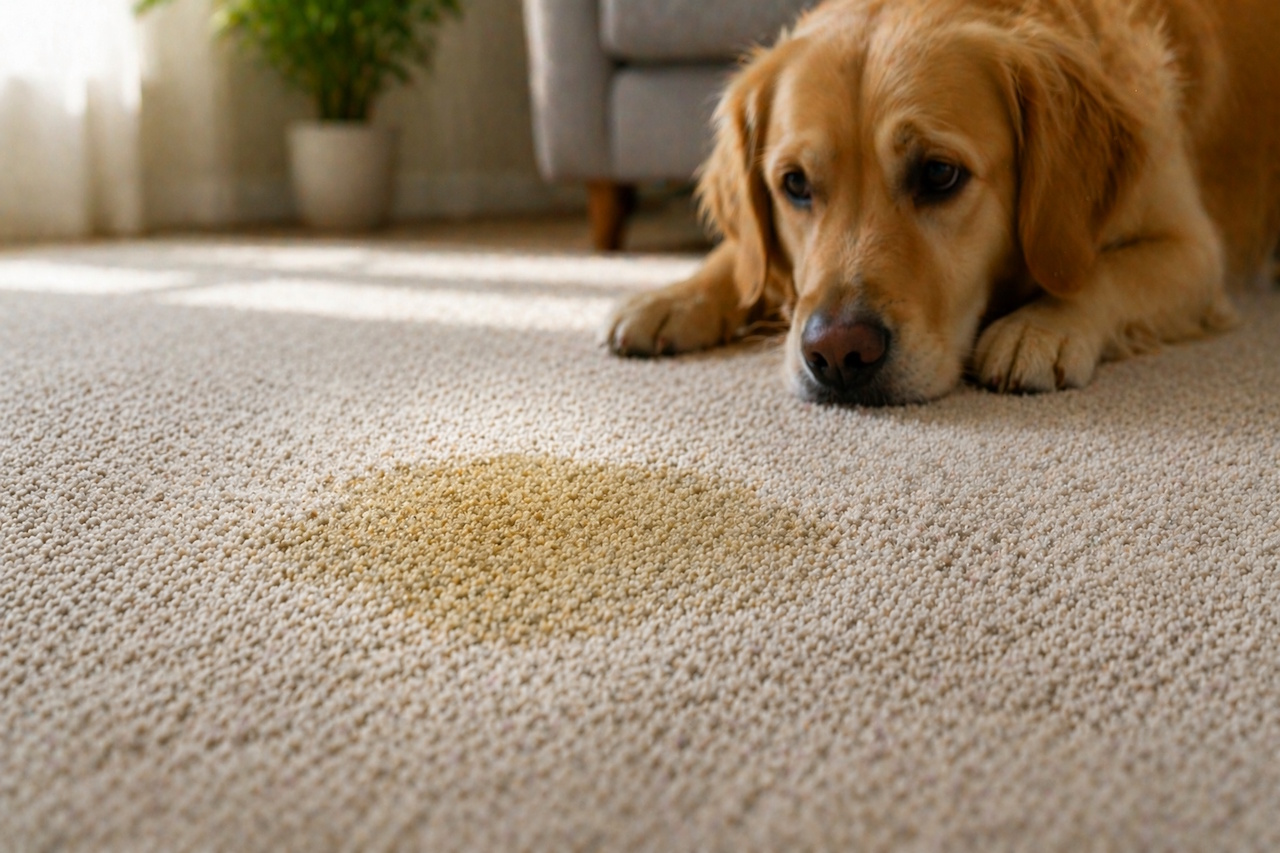
Pet urine is one of the most persistent and misunderstood problems in carpet cleaning. Many people believe the issue is solved once the visible stain disappears or the smell fades after initial cleaning. In practice, that is often only a temporary improvement. The odour returns days or even weeks later, sometimes stronger than before.
This pattern is not random. It is the result of how urine interacts with carpet fibres, backing, and the layers beneath the surface.
Fresh urine is mostly water, along with urea, salts, and organic compounds. When it first contacts the carpet, it spreads quickly through the fibres and begins moving downward. Because carpet acts like a filter, the liquid does not stay only at the top. It travels through the pile and can reach the backing and underlay within minutes.
At this stage, the contamination is still relatively simple to remove if treated correctly. The problem becomes more complex as the urine dries.
As moisture evaporates, the remaining compounds begin to crystallize. Urea breaks down into ammonia and other byproducts through bacterial activity. These changes are what create the strong, sharp odour associated with old urine contamination. The smell is not just trapped moisture. It is a chemical transformation taking place inside the carpet.
Once crystals form, they do not simply disappear with basic cleaning. They remain embedded in the carpet structure and react to humidity. When the air becomes more humid, those crystals absorb moisture again and release odour. This is why many homeowners notice the smell returning on warm or damp days even after cleaning.
The issue is not that the smell comes back. It is that the source was never fully removed.
Another important factor is depth.
Surface cleaning can remove what is visible and reduce odour temporarily, but it often does not reach contamination that has settled deeper in the carpet. If urine has penetrated into the backing or underlay, the problem exists below the level that household cleaning methods typically reach.
This is where repeated light cleaning attempts can make the situation worse. Adding more moisture without proper extraction can spread the contamination further, increasing the affected area. The stain may look lighter, but the odour becomes more widespread over time.
In some cases, the urine spreads beyond the original visible spot, creating a larger zone of contamination that only becomes obvious later.
The type of carpet also influences how severe the problem becomes.
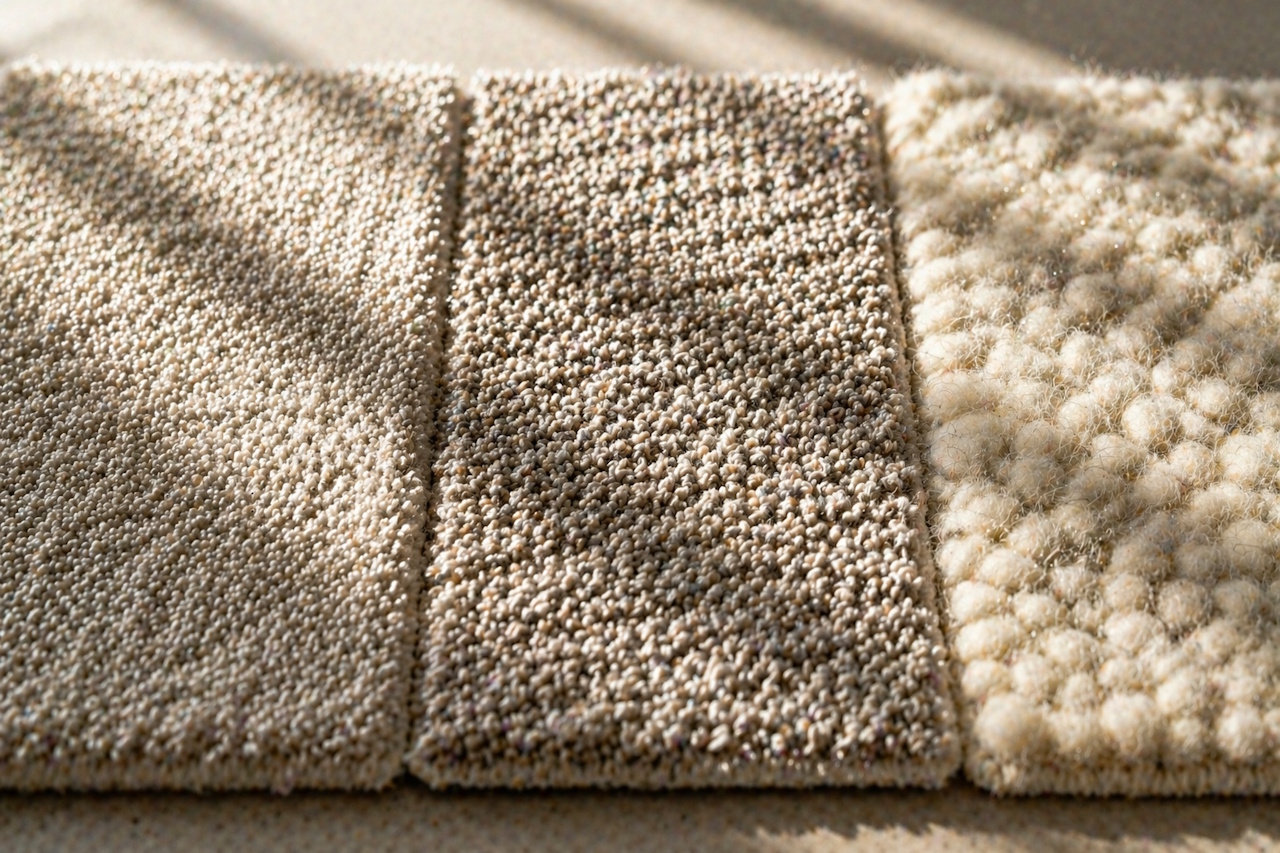
Synthetic fibres such as polyester and olefin do not absorb liquid in the same way as natural fibres, but urine can still move through them into the backing. Nylon can hold onto certain residues more strongly, especially if the contamination is not removed early. Wool is particularly sensitive. It can absorb and retain both moisture and odour, making improper cleaning more likely to cause long-term damage.
The backing and underlay are often the hidden problem.
Even if the top of the carpet is cleaned effectively, urine that has reached the lower layers can continue producing odour. Standard surface treatment does not always address this. In more severe cases, the only complete solution may involve lifting the carpet, treating or replacing the underlay, and addressing the subfloor if contamination has reached that level.
This is why two urine spots can behave very differently. A small, recent accident on a low-pile synthetic carpet may be resolved completely. A repeated issue in the same location, especially on a thicker carpet, can become a structural contamination problem rather than a simple stain.
Enzyme-based cleaners are often recommended, but they are frequently misunderstood.
Enzymatic products are designed to break down organic material such as urine residues. When used correctly, they can be effective. However, they require proper conditions. The affected area needs enough contact time, the right amount of product, and controlled moisture. If the product does not reach all contaminated areas, or if it dries too quickly, the reaction may be incomplete.
Another limitation is that enzymes address organic residue, but they do not replace extraction. After breaking down contamination, the material still needs to be removed from the carpet. Without thorough extraction, residue can remain and contribute to future odour.
This is where professional treatment differs from typical DIY approaches.
Professional cleaning for urine contamination usually involves several steps: identifying the full extent of the affected area, applying targeted treatment to break down residues, allowing sufficient dwell time, and then performing deep extraction to remove both moisture and dissolved contamination. In more advanced cases, subsurface extraction tools are used to pull contamination from deeper layers of the carpet.
The goal is not just to neutralize the smell temporarily. It is to remove the source.
Another common issue is masking.
Some cleaning products contain strong fragrances that cover odour rather than eliminate it. This can create the impression that the problem is solved, but once the fragrance fades, the underlying smell returns. In some situations, the mixture of fragrance and urine odour can make the environment more unpleasant than before.
True odour removal requires elimination of the compounds causing the smell, not covering them.
There is also a difference between a stain and contamination.
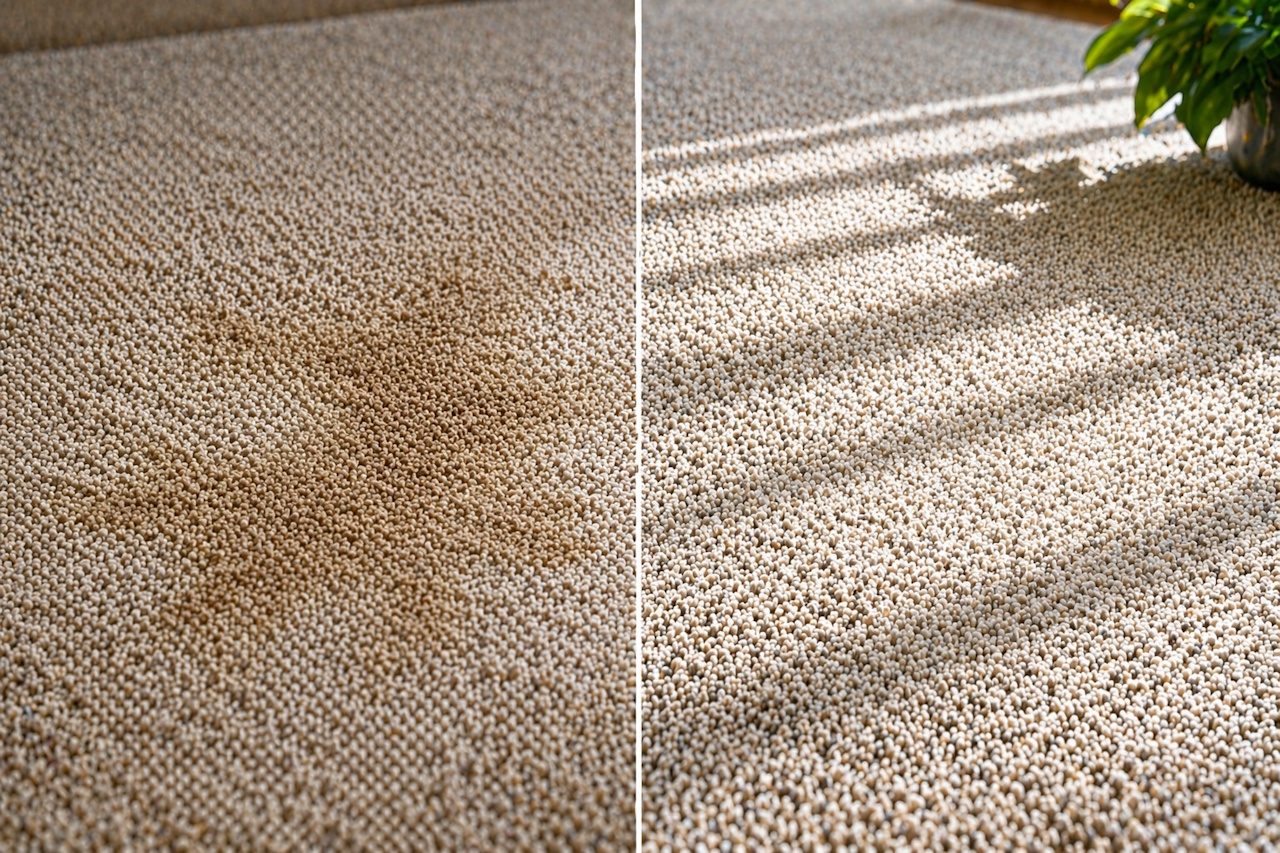
A visible mark may be small, but the contaminated area can be much larger. Urine spreads outward and downward, often beyond what can be seen. Effective treatment has to account for that spread rather than focusing only on the centre of the visible spot.
In cases of repeated pet accidents, behaviour also becomes a factor. Animals tend to return to areas where they detect previous scent markers. If even a small amount of residue remains, it can encourage repeat incidents, turning a single problem into a recurring one.
This makes complete removal more important than partial improvement.
In some situations, especially with older or heavily affected carpets, full restoration may not be possible. Long-term exposure to urine can damage fibres, alter colour, and affect the structural integrity of the backing. In those cases, replacement of part or all of the carpet may be more practical than continued treatment.
The key point is that pet urine problems are not purely surface-level issues. They involve chemistry, depth, and time.
The odour returns because the underlying compounds remain active inside the carpet. Moisture reactivates them, and incomplete cleaning leaves them in place. Removing the smell permanently requires breaking down those compounds and extracting them from all affected layers.
Anything less tends to produce only temporary results.