Why Some Carpet Stains Become Permanent: The Science Behind Set-In Spots
Most people think a stain becomes permanent simply because it was not cleaned fast enough. Speed does matter, but it is only one part of the story. In reality, whether a carpet stain can be removed depends on chemistry, fibre type, temperature, moisture, and the cleaning method used in the first moments after the spill.
This is why two stains that look similar on the surface can behave very differently. One comes out almost completely, while the other leaves behind a shadow, colour change, or hardened patch that never fully disappears.
To understand why this happens, it helps to look at what a stain actually is.
A stain is not just dirt sitting on top of carpet fibres. In many cases, it is a substance that has bonded with the fibre, settled into the backing, or changed the colour of the material itself. Once that happens, cleaning becomes less about lifting soil and more about reversing a chemical or structural change.
The first factor is the type of staining material.
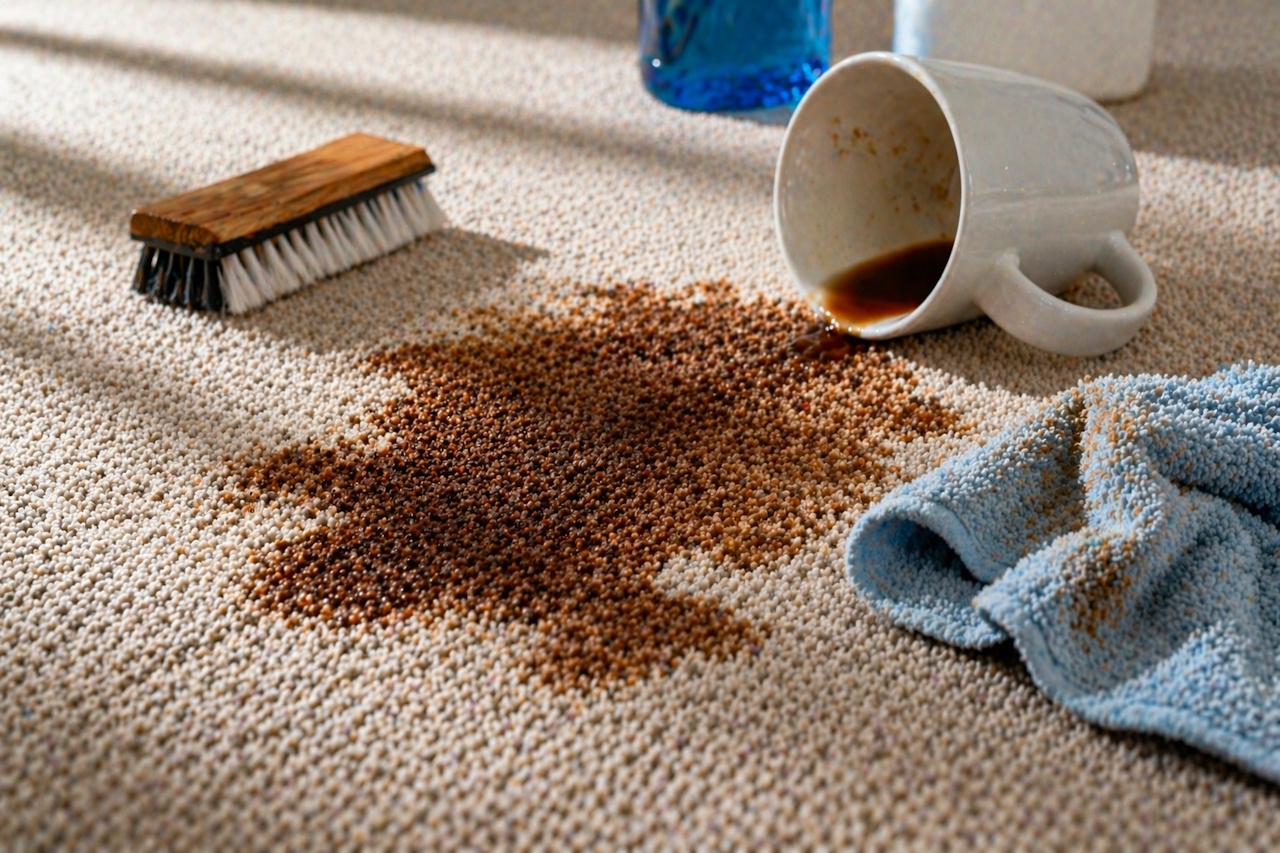
Some stains are protein based, such as blood, dairy, or bodily fluids. Others are oily, such as cooking grease, makeup, or lotion. Some are dye based, such as wine, coffee, juice, sports drinks, and ink. Each group behaves differently and requires a different response.
Protein stains can set permanently when heat is applied too early. Hot water may seem like a good idea, but with protein contamination it can lock the material into the fibre in the same way heat sets a food residue onto a surface. This makes later removal much harder.
Oily stains present a different problem. Oil does not dissolve well in water alone. When homeowners try to clean grease with only warm water and a towel, the result is often spreading rather than removal. The stain may become less visible while wet, then reappear after drying because the oil was never fully broken down.
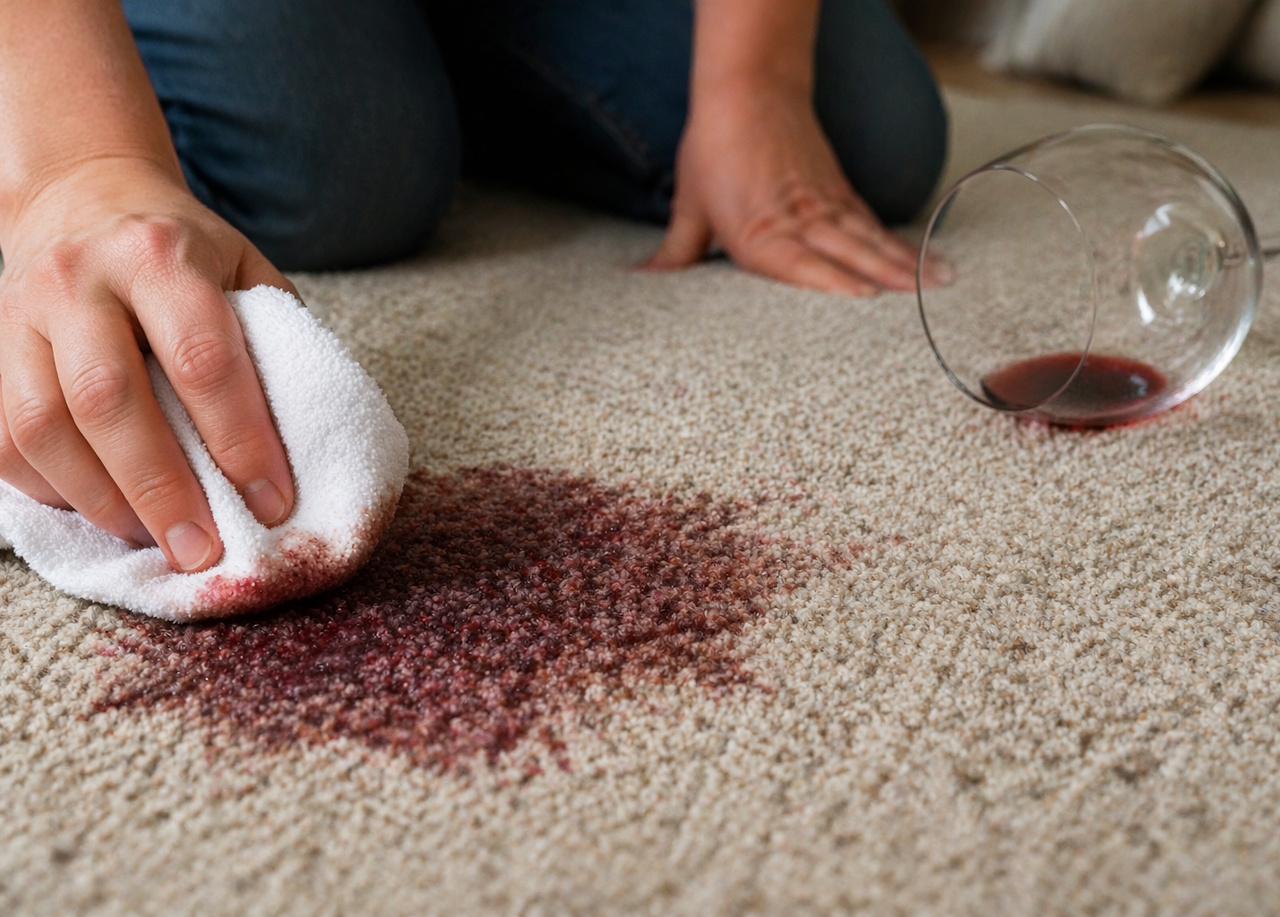
Dye based stains are often the most deceptive. They may look removable at first, but the pigments can migrate deep into the fibre and attach to porous areas inside it. In some cases, especially with lighter carpets, strong colourants can permanently alter the appearance of the carpet even after professional treatment.
The second factor is carpet fibre type.
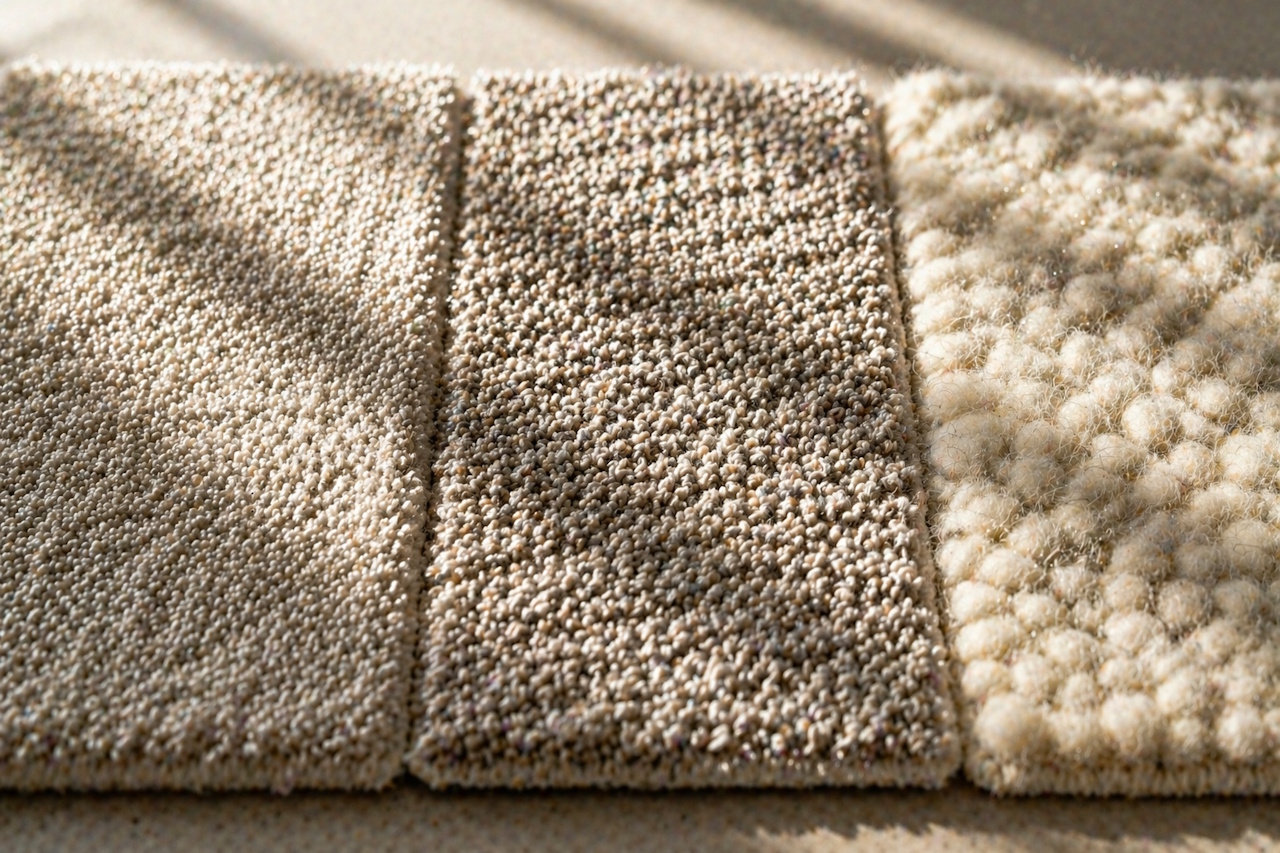
Not all carpets react the same way to staining. Synthetic fibres such as polyester, nylon, and olefin each have different levels of absorbency and resistance. Wool behaves differently again because it is a natural fibre and more chemically sensitive.
For example, wool is more vulnerable to high alkalinity, aggressive spotting agents, and over-wetting. A cleaning product that works on a synthetic carpet can damage wool, distort texture, or strip colour. Nylon is generally durable, but it can still absorb certain dye molecules under the wrong conditions. Polyester resists some water based stains fairly well, yet it attracts oils more easily than many homeowners expect.
This is one reason stain removal advice from generic blogs often fails in real situations. The advice assumes the carpet is universal, but it is not.
The third factor is time.
Fresh spills are easier to remove because the contamination is still near the surface and has not fully bonded with the carpet. As time passes, liquid moves downward through capillary action. It spreads into surrounding fibres, settles into the base of the pile, and may even reach the underlay.
At that stage, surface cleaning can remove what is visible on top while leaving contamination below. This leads to one of the most frustrating outcomes in carpet care: the stain appears gone, then returns after drying. This is often called wicking. Moisture from deep in the carpet rises back toward the surface as the area dries, carrying dissolved residue with it.
In other words, some stains do not really come back. They were never fully removed from the lower layers in the first place.
The fourth factor is pH.
This is one of the least understood parts of stain removal. Some substances respond better to acidic treatment, while others require alkaline chemistry to break down. Using the wrong side of the pH scale can make a stain harder to remove or even permanently alter the fibre.
Coffee and tea, for example, often contain tannins. These are plant based colour compounds that respond differently from grease or food oils. A stain remover that works on oily contamination may do very little for a tannin stain. On the other hand, using a highly alkaline cleaner on a delicate fibre can cause colour distortion or texture damage.
This is why professional stain treatment usually starts with identification, not scrubbing. The technician needs to determine what the stain is before choosing the chemistry.
The fifth factor is heat and agitation.
Many people instinctively scrub a spill because it feels like action. In practice, aggressive scrubbing often damages the carpet faster than the stain itself. It can fray fibre tips, distort pile direction, and spread contamination laterally into a wider area.
Heat creates a similar risk when used incorrectly. On the right stain and fibre, controlled heat may help activate cleaning agents. On the wrong stain, it can accelerate bonding, fix colourants, or set proteins deeper into the material.
That is why a stain can become permanent not only because of the original spill, but also because of the way it was treated afterward.
Another important distinction is the difference between a true stain and permanent damage.
Sometimes what appears to be a stain is no longer removable because the carpet has already been altered. Bleach spots are the clearest example. They are not stains in the traditional sense. They are areas where colour has been removed from the carpet. No amount of cleaning will restore the original dye.
The same can happen with harsh chemicals, pet urine left too long, or repeated use of unsuitable DIY products. In those cases, the issue is not leftover soil but fibre damage, dye loss, or discoloration at a structural level.
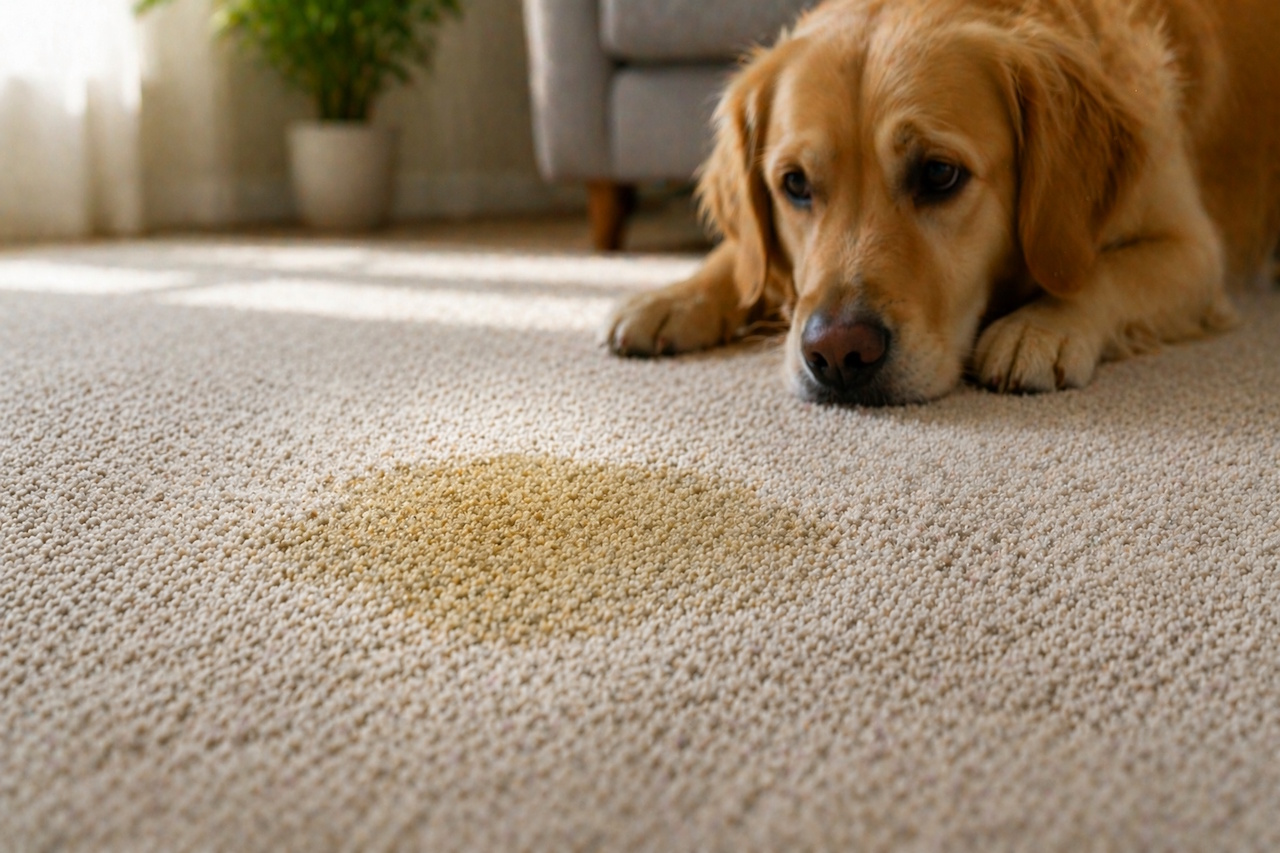
Pet urine is especially complex. A fresh accident may be removable, but once it dries, crystals remain behind. Those crystals react to humidity and continue causing odour. If the contamination reaches the backing or underlay, the problem becomes deeper than the visible spot. In severe cases, the stain is only part of the issue. The larger problem is contamination below the carpet surface.
Professional cleaning makes the biggest difference when the stain is still removable but no longer a simple surface issue. Deep extraction, fibre-safe stain treatment, and controlled rinsing help remove contamination from within the pile rather than only from the top layer.
Still, even professional cleaning has limits. If a dye has permanently attached, if a fibre has been chemically burned, or if the carpet backing has been contaminated for too long, full restoration may not be possible. An honest assessment matters more than unrealistic promises.
The practical takeaway is simple.
A stain becomes permanent when one of three things happens: the contaminant chemically bonds with the fibre, the residue settles too deep to be fully removed by surface methods, or the carpet itself is permanently altered by heat, chemical reaction, or dye loss.
The best immediate response is to blot, not rub. Remove as much liquid as possible, avoid random household chemicals, and do not assume every stain needs hot water or heavy scrubbing. Early treatment helps, but correct treatment matters even more.
Carpet stain removal is not just about cleaning what you can see. It is about understanding what the spill is, what fibre it touched, and what changed in the carpet during the first few minutes after contact.
That is the difference between a stain that lifts cleanly and a stain that becomes part of the carpet.